


Another Door Closes To The 1970s

Updated: Oct 6
Every week now it seems another name from the 1970s quietly slips away. Not always the household stars either. Sometimes it is the people just off-centre from the spotlight - the session guitarist, the producer, the singer from a band that was popular, the celebrity whose story belonged to another era entirely.
Recently there were four deaths that, on the surface, seem unrelated: guitarist Wayne Perkins, singer Dennis Locorriere from Dr. Hook, producer Jack Douglas, and actress and singer Claudine Longet. Yet together they form a map of the 1970s - excess, celebrity culture, reinvention, and the feeling that another world is slowly disappearing from view.
Wayne Perkins

Wayne Perkins perhaps best represents the hidden architecture of 1970s rock music. Never a superstar in his own right, he became one of those musicians whose fingerprints were everywhere. His fluid Southern guitar style almost earned him a permanent place in The Rolling Stones during the mid-70s, particularly around the Black and Blue auditions. For a time, Perkins himself seemed convinced he was effectively in the band, hanging out with Keith Richards , a fluid style of playing reminiscent of the departed Mick Taylor. Yet on the apparent basis that Ronnie Wood was a) English and b) looked like a Rolling Stone, he ultimately got the job. Perkins contributed unforgettable guitar work to “Hand of Fate,” “Memory Motel,” and “Worried About You.” (the latter not released until Tattoo You in 1981). His playing also appeared on Bob Marley’s landmark Catch a Fire album and Joni Mitchell's Court & Spark , reminders of how deeply connected the era’s great records often were behind the scenes. Last year with the expanded Black & Blue Deluxe edition , listeners had a further chance to hear his full contributions to the Stones sound.
Wayne Perkins - (born Sep 6, 1951, died after a stroke, March 16, aged 74)
Dennis Locorriere

Dennis Locorriere was the soulful voice behind Dr. Hook, a band that somehow managed to move from counterculture oddballs to mainstream soft-rock hitmakers without losing their sense of humour. Their breakthrough came through Shel Silverstein’s brilliantly satirical “Cover of the Rolling Stone,” a song that mocked fame while simultaneously chasing it. The joke, of course, was that everybody in the 1970s wanted validation from Rolling Stone magazine. Getting on the cover meant you had arrived.
But Dr. Hook evolved far beyond novelty songs. By the late 70s they had become radio staples with songs like “Sharing the Night Together” and “When You’re in Love With a Beautiful Woman.” In many ways they mirrored the decade itself - moving from hippie humour and country-rock looseness into polished adult pop as the industry changed around them. Locorriere always seemed to carry a smile, even through the endless legal disputes surrounding the Dr. Hook name in later years. I still remember him coming to Christchurch for a show at the Town Hall - a 2000

capacity venue with only a handful of people scattered through the seats. Yet he performed with warmth and professionalism anyway, as though the crowd size barely mattered. Locorriere’s death feels like the end of another thread connecting back to transistor radios, FM countdowns, and the strange warmth of 1970s radio culture
Dennis Locorriere (born June 13, 1949, died of kidney disease, May16, aged 76)
Jack Douglas

Jack Douglas belonged to another corner of that same musical universe. Producers rarely become famous, but Douglas was there at crucial moments: Aerosmith, Patti Smith, Cheap Trick, and most importantly, John Lennon’s comeback. Having worked with the ex Beatle earlier in the decade, Douglas co-produced Double Fantasy, the album Lennon made after retreating from the music business for five years to raise his son Sean.

Lennon sounded rested, optimistic, older, happier. Douglas helped shape that sound - warm, human, uncluttered. Tragically, he also became one of the last collaborators to see Lennon alive before December 9, 1980, changed music history forever. Yet like many survivors from that era, Douglas carried complicated baggage afterwards. In the years following Lennon’s death there were reported legal and financial disputes involving Yoko Ono, a reminder of how quickly grief, money, ownership and legacy could become tangled together in the music business. Douglas himself also developed a reputation for occasionally “embroidering” stories from recording sessions - adding extra colour, mythology and perhaps selective memory to anecdotes about Lennon, Aerosmith and the wider rock world.
But maybe that too feels very 1970s. Rock history from that period often survives through half-remembered stories told late at night: who was in the studio, who played which guitar part, who disappeared for three days, who said what. The line between fact and legend blurred long ago. Douglas was part producer, part storyteller, helping preserve the mythology of an era that increasingly feels like ancient history now.
The death of Douglas feels like another direct line to that final chapter of the classic rock era disappearing.
Jack Douglas (born Nov 6, 1945 died of lymphoma complications, May11, aged 80)
Claudine Longet

And then there is Claudine Longet - perhaps the most purely “1970s” story of them all.
Long before true crime documentaries became a streaming industry, Longet’s story had already combined glamour, celebrity, scandal, and astonishing privilege. The French singer and actress, closely associated with easy-listening pop and Aspen celebrity culture, became infamous after the 1976 shooting death of skier Vladimir “Spider” Sabich. Married previously to entertainer Andy Williams, she moved within a wealthy and protected world where celebrity connections seemed capable of bending reality itself.
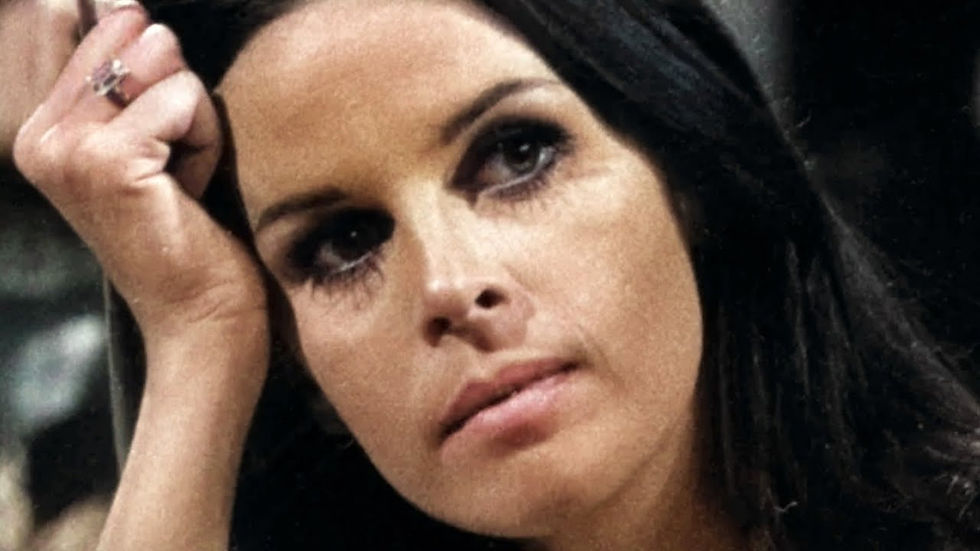
The eventual outcome - a relatively minor conviction and brief detention (able to be served at weekends) - remains one of the decade’s enduring examples of how fame and influence operated differently in another America. Her plight caught the attention of Mick Jagger who proceeded to summarize the tale in a rollicking unreleased track “Claudine” later released on the Some Girls album expanded edition.
Now only Spider know's for sure
But he ain't talking anymore
Is he Claudine ?
Claudine's back in jail again
Claudine's back in jail again
She only does it on weekends
Claudine
Claudine Longet born Jan 29, 1942, died of undisclosed causes, May14, aged 84)
What links all four deaths is not simply nostalgia. It is the gradual disappearance of people connected to a musical and cultural ecosystem that once felt permanent.
The 1970s were messy, excessive, creative, reckless, funny, and often morally chaotic. Session musicians drifted between legendary albums. Bands reinvented themselves multiple times within a single decade. Producers shaped entire eras from behind studio glass. Celebrity scandals unfolded slowly through newspapers and gossip columns rather than endlessly refreshing social media feeds.
Now the people who inhabited that world are leaving us one by one.
They are reminders not only of mortality, but of vanished atmospheres - vinyl records, late-night FM radio, Rolling Stone covers pinned to bedroom walls, and the sense that rock music once sat right at the centre of popular culture.
And yet, in one of those strange twists history occasionally produces, two of the most talked-about upcoming releases are still from survivors of that same era: Paul McCartney with The Boys of Dungeon Lane (May 29) and ( yes !) The Rolling Stones with Foreign Tongues (July 12).
So go figure.


Comments